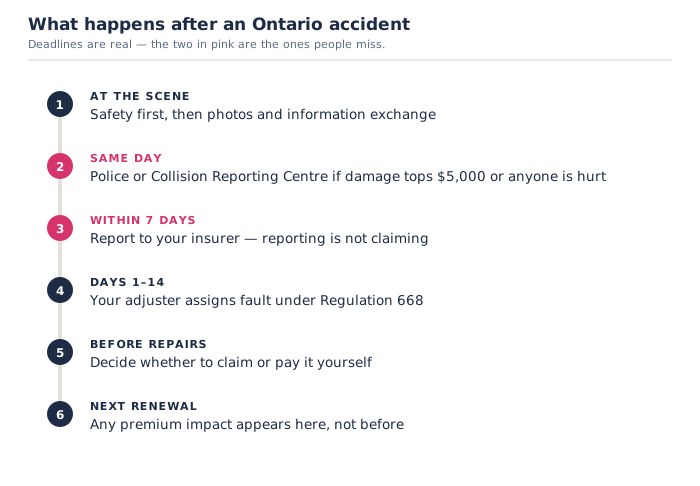
1. Safety, then evidence
Check for injuries — 911 if anyone's hurt. Hazards on, move drivable vehicles out of live lanes. Exchange licence, plate, and insurance details with every driver; get witness numbers. Photograph everything: positions, damage, plates, road, signs. Say nothing about whose fault it was.
2. Police or Collision Reporting Centre — if required
Police must be involved when total damage looks to exceed $5,000, or regardless of amount if anyone's injured, a pedestrian or cyclist is involved, public property is damaged, a driver is uninsured, or impairment is suspected. If police don't attend, report to a Collision Reporting Centre within 24 hours. Below the threshold with none of those factors: no police needed.
Two rules that trip people up: report at the centre in the region where the crash happened — not the one closest to home — and go as soon as possible (within 24 hours in most regions; Toronto allows 48 if your vehicle is drivable). If your vehicle was towed, the tow goes straight to the CRC.
3. Report to your insurer (reporting ≠ claiming)
Call your insurer or broker within 7 days regardless of fault — it's a policy condition. You are reporting the accident, not necessarily claiming. If you may pay the damage yourself, say exactly that.
4. Learn your fault percentage
Your adjuster assigns fault from the official scenario rules — weather and ice don't count. Know the standard outcome for your crash before you talk numbers, and dispute with dashcam or witnesses if the scenario is wrong.
Check your fault & estimated increase → Disagree with it? →5. Decide: claim or pay it yourself
Small, injury-free damage can be cheaper out of pocket — especially under the $5,000 minor-accident rule. Run the 3-year math before the insurer pays anything, because once they pay a dollar, the choice is made.
Run the claim-or-pay numbers →6. See a doctor, start benefits
Get checked promptly — gaps in treatment get used against you. Medical and rehab benefits come from your own insurer regardless of fault; notify within about 7 days and return the forms within about 30. Soft-tissue injuries start under a $3,500 cap unless records show more.
Injury & benefits questions →7. Fight for fair value on a total loss
You're owed actual cash value — and the first offer is negotiable. Pull comparable listings, price them against your mileage, request the valuation report, and verify its comparables.
Quick fair-value estimate → Full valuation review report →8. Understand what the ticket does
The accident and the ticket are rated separately. Only a conviction counts, it lasts 3 years from the day you pay, and its class (minor/major/serious) matters more than its demerit points.
Look up your ticket → Careless driving? →9. Check your renewal — then shop it
The financial hit lands at renewal, not before. Check whether your increase matches your situation, get it itemized, and compare quotes — insurers price the same claim very differently.
Check your renewal →The two documents to keep handy through all of this
Your pink slip (proof of insurance) and your policy declarations page — the one listing your coverages, deductibles, and endorsements like accident forgiveness (OPCF 39), rental coverage (OPCF 20), and the DCPD opt-out (OPCF 49). Half the questions in this process are answered by that one page. Can't find it? Your broker can resend it same-day.
Why the order matters
Several Ontario deadlines run from the day of the accident rather than from when you get around to it: reporting to a Collision Reporting Centre within 24 hours where required, notifying your insurer within seven days, and the accident benefits application window after that. Working through the steps in order keeps you inside all of them.